








































































































































































Table of Contents
ToggleHow to Use Apple Cider Vinegar for Weight Loss: Safe Tips That Actually Work
Author: RVLNSV PRASAD
Updated: September 2026
About Us | Author Bio | Editorial Policy | Contact Us

Introduction
If you are searching for how to use apple cider vinegar for weight loss, you have probably seen claims that a few teaspoons of vinegar can melt away body fat.
The reality is much less dramatic.
Apple cider vinegar may have some effects on appetite, blood glucose, and body weight, but current evidence does not show that it is a powerful weight-loss treatment. Mayo Clinic similarly notes that evidence supporting apple cider vinegar as a weight-loss solution is limited. Mayo Clinic — Apple cider vinegar for weight loss
That does not mean you have to ignore it completely.
For some people, diluted apple cider vinegar can be incorporated into meals or used as a small part of a healthier eating pattern. The important point is to treat it as an optional addition rather than a shortcut.
Apple cider vinegar contains acetic acid, which is produced during fermentation. Researchers have investigated whether vinegar consumption can influence glucose responses, appetite, and body weight, although the evidence remains mixed and many studies have been small or short-term. Harvard T.H. Chan School of Public Health — Apple cider vinegar
So, what is the sensible approach?
Use small amounts.
Dilute it properly.
Protect your teeth.
Do not replace meals with it.
And most importantly, build your weight-loss plan around nutrition, physical activity, sleep, and sustainable habits.
Quick Answer: How to Use Apple Cider Vinegar for Weight Loss
If you want to use apple cider vinegar while trying to lose weight, the safest approach is to dilute a small amount in water or use it as part of food, rather than drinking it straight.
A practical approach is
| Practical tip | Why it matters |
|---|---|
| Dilute apple cider vinegar. | Reduces direct exposure to concentrated acid |
| Start with a small amount. | Helps you assess tolerance |
| Use it with meals if preferred. | Maybe easier on the stomach |
| Do not replace meals. | Prevents unnecessary calorie and nutrient restriction |
| Protect your teeth. | Acidic drinks can contribute to enamel erosion. |
| Focus on overall diet. | Weight loss depends on overall energy balance and lifestyle. |
| Check with your clinician if taking medication. | Vinegar may not be appropriate for everyone. |
There is no well-established dose that guarantees weight loss. The evidence does not support taking large quantities in an attempt to accelerate fat loss. Mayo Clinic also cautions that apple cider vinegar is not a proven quick fix for losing weight. Mayo Clinic — Apple cider vinegar and weight loss
What Is Apple Cider Vinegar?
Apple cider vinegar is produced by fermenting apple juice.
During fermentation, sugars are converted into alcohol and then into acetic acid. That acetic acid gives vinegar its characteristic sour taste and strong acidity.
Researchers have studied vinegar because acetic acid may influence several metabolic processes.
However, laboratory or physiological effects should not automatically be interpreted as meaningful fat loss in real life.
Harvard’s Nutrition Source notes that research on apple cider vinegar has investigated blood glucose, appetite, and weight, but the evidence is not strong enough to regard it as a weight-loss treatment. Harvard T.H. Chan School of Public Health — Apple cider vinegar
This distinction is important because online claims often go much further than the research.
Does Apple Cider Vinegar Actually Help With Weight Loss?
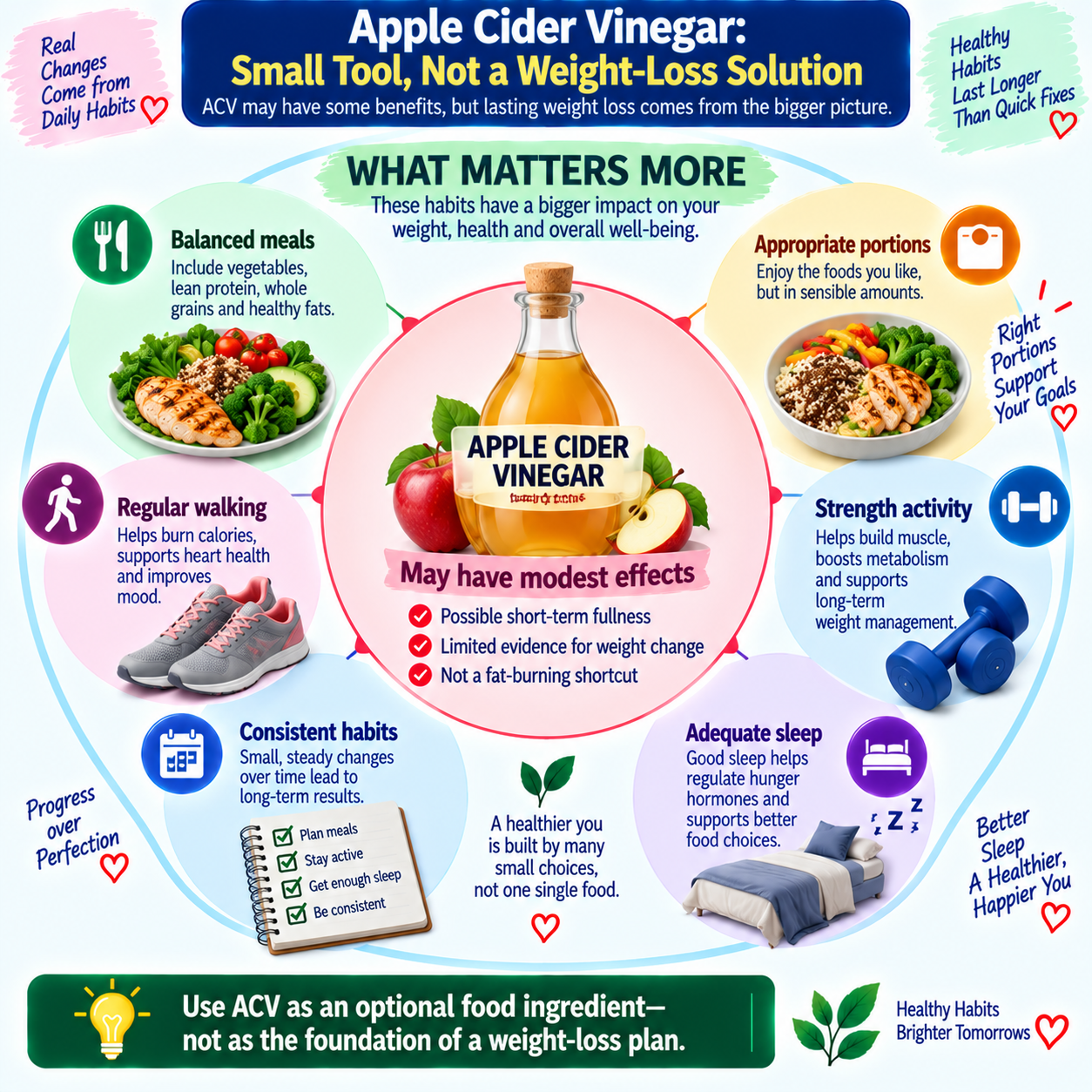
The answer is possibly, but the effect appears modest, and the evidence is still limited.
Some clinical studies have reported reductions in body weight or other measurements among people consuming vinegar. One randomized clinical trial published in BMJ Nutrition, Prevention & Health reported reductions in body weight, BMI, and related measures after apple cider vinegar use over a relatively short period. However, the study was small and short-term, so it cannot establish that apple cider vinegar produces substantial or lasting weight loss for everyone. BMJ Nutrition, Prevention & Health — Apple cider vinegar clinical trial
Other reviews have found that the overall evidence remains uncertain.
That means it would be misleading to say:
“Apple cider vinegar burns belly fat.”
A more evidence-based statement is
Apple cider vinegar may have a small effect on some metabolic or weight-related measures, but it should not be considered a stand-alone weight-loss treatment.
Mayo Clinic makes a similar point when discussing the limited evidence for apple cider vinegar and weight loss. Mayo Clinic — Apple cider vinegar for weight loss
How Might Apple Cider Vinegar Affect Weight?
Researchers have proposed several possible mechanisms.
It May Affect Fullness
Some research suggests vinegar consumption may influence feelings of fullness after meals.
That could potentially reduce food intake in some circumstances.
However, feeling fuller during one meal does not automatically translate into long-term fat loss.
It May Affect Blood Glucose Responses
Vinegar has been studied for its effects on post-meal blood glucose.
This is one reason apple cider vinegar has attracted attention among people interested in metabolic health.
However, people with diabetes should not use vinegar as a substitute for prescribed treatment.
The National Center for Complementary and Integrative Health notes that evidence around apple cider vinegar remains limited and that safety and medication considerations need to be taken into account. NCCIH—Apple Cider Vinegar
It May Change How a Meal Is Digested
Vinegar consumed with food can affect digestion and gastric emptying in some circumstances.
That does not mean it “boosts metabolism” enough to cause significant fat loss.
Metabolism is much more complicated than adding one acidic drink to your daily routine.
A Realistic Way to Think About Apple Cider Vinegar
Imagine someone drinks diluted apple cider vinegar every morning but continues to consume excess calories, sugary drinks, highly processed foods, and very little physical activity.
The vinegar is unlikely to overcome those habits.
Now imagine another person uses a small amount of vinegar with meals while also eating more vegetables, choosing adequate protein, reducing sugary drinks, walking regularly, and sleeping consistently.
In that situation, apple cider vinegar may simply be one small part of a broader healthy routine.
That distinction is far more useful than thinking of vinegar as a fat-burning product.
Safe Ways to Use Apple Cider Vinegar for Weight Loss
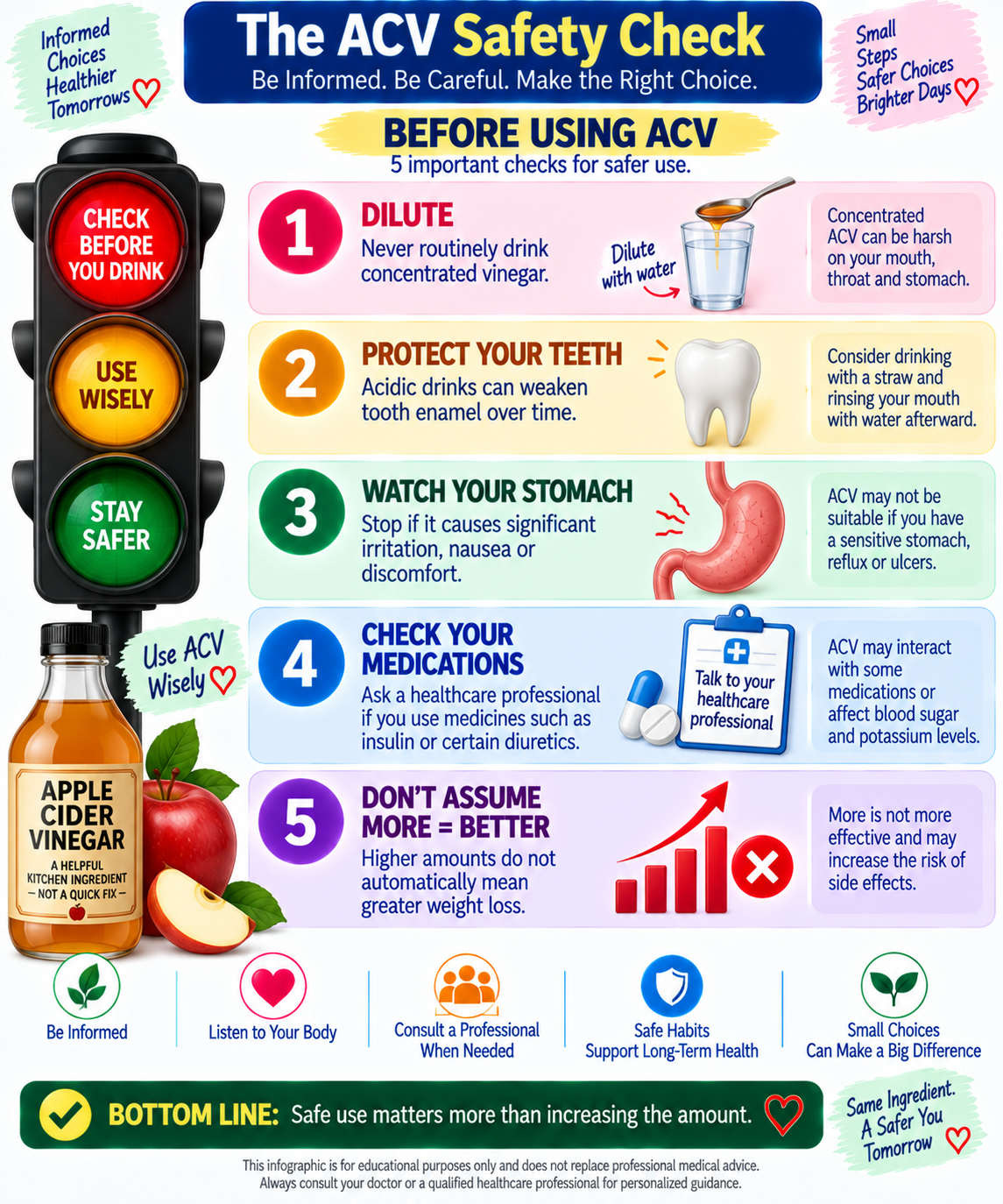
1. Always Dilute It
Do not drink concentrated apple cider vinegar straight.
Vinegar is highly acidic. Repeated exposure can irritate the mouth and throat and contribute to dental erosion.
Cleveland Clinic specifically warns about potential problems associated with excessive vinegar consumption and recommends safer approaches rather than drinking concentrated vinegar. Cleveland Clinic — Can Apple Cider Vinegar Help With Weight Loss?
A simple option is to dilute a small amount in a large glass of water.
You can also incorporate vinegar into salad dressing or another meal rather than drinking it as a concentrated shot.
2. Start With a Small Amount
More is not better.
There is no convincing evidence that consuming large quantities produces proportionally greater weight loss.
Starting with a small amount also makes it easier to identify stomach irritation or other unwanted effects.
3. Consider Using It With Food
Some people prefer diluted vinegar around mealtimes.
If taking it on an empty stomach causes burning, nausea, or discomfort, do not force yourself to continue.
Using vinegar as a food ingredient may be more comfortable than drinking it separately.
4. Never Replace a Meal With Apple Cider Vinegar
This is one of the most important points.
Apple cider vinegar does not provide the protein, essential fats, vitamins, minerals, or overall nutrition required from a balanced meal.
Replacing meals with vinegar can encourage excessive restriction and may leave you hungry later.
A sustainable weight-loss diet should provide adequate nutrition rather than relying on appetite suppression.
Apple Cider Vinegar and Tooth Health
This issue is easy to overlook.
Because vinegar is acidic, frequent exposure can contribute to erosion of tooth enamel.
The American Dental Association explains that frequent exposure to acidic foods and drinks can contribute to dental erosion. American Dental Association — Dental erosion
If you drink diluted vinegar:
- Do not swish it around your mouth.
- Consider drinking it through a straw.
- Rinse your mouth with plain water afterward.
- Avoid brushing your teeth immediately after acidic drinks.
Using vinegar as part of food can also reduce direct exposure compared with drinking it repeatedly.
Can Apple Cider Vinegar Reduce Appetite?
Possibly, but the evidence is not strong enough to rely on it.
Some studies have reported increased satiety after vinegar consumption.
The problem is that appetite is affected by many factors.
Sleep, stress, protein intake, fiber, meal composition, physical activity, emotions, medications, and overall calorie intake can all influence hunger.
Therefore, if you notice that diluted vinegar makes a meal feel more satisfying, consider it a small observation rather than proof that it is causing fat loss.
My Experience: What I Would Emphasize Instead
For an evidence-based health article, I would avoid presenting an invented personal success story.
Instead, the practical lesson is straightforward.
A person who wants to lose weight should not judge the success of apple cider vinegar by how quickly the scale changes.
A better question is
“Has this small habit helped me maintain healthier eating without causing side effects?”
If the answer is yes, it may have a place in your routine.
If it causes stomach irritation, tooth sensitivity, nausea, or other problems, there is no reason to force it.
Apple Cider Vinegar With a Healthy Weight-Loss Routine
The strongest strategy is to combine small sustainable habits.
Build Meals Around Protein and Fiber
Protein can help support muscle maintenance during weight loss, while fiber-rich foods can contribute to fullness.
Good choices include:
- Eggs
- Fish
- Beans
- Lentils
- Yogurt
- Vegetables
- Fruit
- Whole grains
- Nuts and seeds
Your exact needs depend on your age, health, activity level, and dietary pattern.
Reduce Liquid Calories
Sweetened drinks can add substantial calories without providing the same fullness as solid food.
Replacing sugary beverages with water or unsweetened drinks may be a more meaningful weight-management strategy than adding vinegar.
Walk Regularly
Walking is simple and accessible for many people.
You do not need an extreme exercise program to begin becoming more active.
A consistent walking routine can increase daily energy expenditure and support cardiovascular health.
You can also combine walking with resistance exercise when appropriate.
For broader weight-management guidance, the CDC emphasizes regular physical activity together with healthy eating patterns as part of weight management. CDC — Physical Activity and Your Weight and Health
Get Enough Sleep
Sleep should not be treated as an optional part of weight management.
Poor sleep can influence appetite, food choices, mood, and daily energy.
The CDC recommends that adults generally aim for at least seven hours of sleep per night, although individual needs vary. CDC—About Sleep and Your Health
A Simple Apple Cider Vinegar Weight-Loss Routine
If your healthcare professional says it is appropriate for you, a simple routine could look like this:
Morning
Drink water and eat a nutritious breakfast if you normally eat breakfast.
Lunch
If you enjoy vinegar, use a small amount diluted appropriately or include it in a salad dressing.
Afternoon
Choose water instead of a sugary drink.
Evening
Eat a balanced dinner rather than trying to compensate for calories with vinegar.
Daily
Walk, remain physically active, and maintain a consistent sleep schedule.
The vinegar is the smallest part of this routine.
That is intentional.
Common Mistakes People Make
Mistake 1: Drinking It Undiluted
Concentrated vinegar can expose your mouth, throat, and teeth to strong acidity.
Mistake 2: Taking Too Much
Large amounts do not guarantee better results.
Excessive consumption may increase side effects.
Mistake 3: Expecting Belly-Fat Loss
There is no reliable evidence that apple cider vinegar specifically targets abdominal fat.
Mistake 4: Skipping Meals
Vinegar should never become a substitute for nutritious food.
Mistake 5: Ignoring Dental Health
Repeated acid exposure can damage tooth enamel.
Mistake 6: Treating It as a Diabetes Treatment
Apple cider vinegar should not replace prescribed diabetes medication or professional dietary management.
Mistake 7: Taking It Despite Side Effects
Persistent nausea, abdominal discomfort, throat irritation, or other symptoms are reasons to stop and seek professional advice.
Mistake 8: Assuming Natural Means Safe
“Natural” does not automatically mean harmless.
NCCIH advises consumers to consider potential risks and interactions when using complementary health products. NCCIH — Using Dietary Supplements Wisely
Who Should Be Careful With Apple Cider Vinegar?
Apple cider vinegar may not be appropriate for everyone.
Talk with a healthcare professional before using it regularly if you:
- Take insulin or other diabetes medicines
- Take medicines that affect potassium
- Use diuretics
- Have significant kidney disease
- Have severe digestive problems
- Have a history of eating disorders
- Have difficulty swallowing
- Experience frequent acid reflux
Cleveland Clinic notes that vinegar can potentially interact with medications and may affect potassium levels, making professional advice particularly relevant for people with certain medical conditions. Cleveland Clinic — Apple Cider Vinegar and Weight Loss
Apple Cider Vinegar and Diabetes
This topic deserves extra caution.
Some research suggests vinegar may influence post-meal glucose levels.
That does not mean it can replace diabetes medication, dietary treatment, exercise, or blood-glucose monitoring.
People taking glucose-lowering medication may also need individualized advice because combining multiple glucose-lowering strategies can have unintended effects.
If you have diabetes, discuss regular apple cider vinegar use with your healthcare professional rather than experimenting with large doses.
Apple Cider Vinegar Benefits Beyond Weight Loss
Apple cider vinegar is often promoted for many different health benefits.
Claims commonly include:
- Better digestion
- Lower blood sugar
- Improved cholesterol
- Detoxification
- Fat burning
- Reduced appetite
Some areas have preliminary evidence, while others remain poorly supported.
Harvard’s Nutrition Source emphasizes that vinegar has been studied for several metabolic effects, but the evidence should not be exaggerated into broad health claims. Harvard T.H. Chan School of Public Health — Apple Cider Vinegar
In particular, there is no need to describe apple cider vinegar as a “detox.”
Your liver and kidneys already perform major roles in processing and eliminating substances from the body.
A People-First Strategy: Use Vinegar as a Food, Not a Fat Burner
One practical change can make this habit easier.
Instead of thinking:
“I need to drink vinegar to lose weight.”
Think:
“I enjoy vinegar, so I can use a small amount in a nutritious meal.”
For example, vinegar can be incorporated into:
- Vegetable salads
- Bean salads
- Homemade dressings
- Certain vegetable dishes
- Other balanced meals
This approach removes the pressure to treat vinegar like medicine.
It also makes the habit easier to maintain.
Another People-First Strategy: Measure the Habit, Not Just the Scale
If you are trying apple cider vinegar, do not measure success only by body weight.
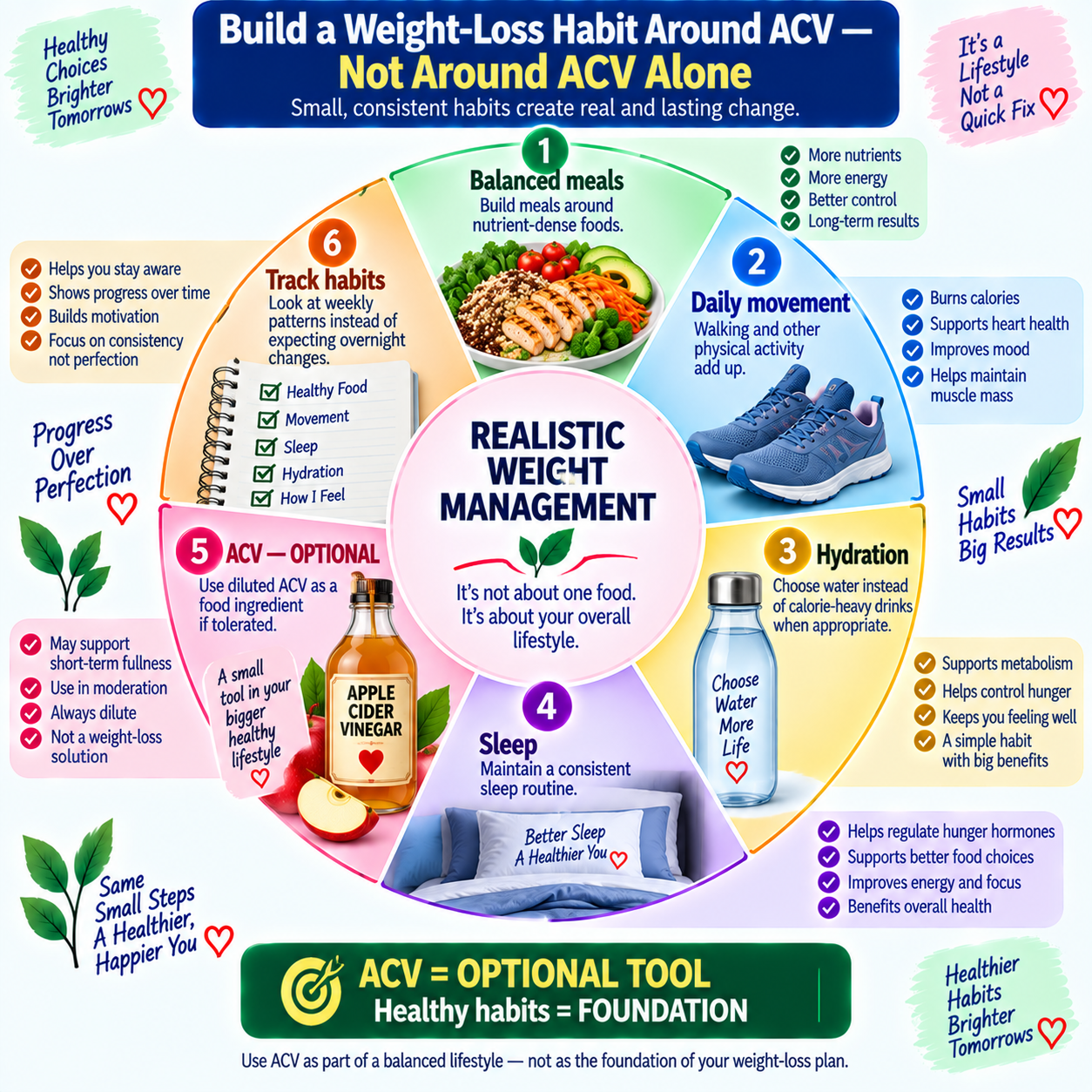
Track:
| What to monitor | Why it matters |
|---|---|
| Hunger between meals | Shows whether your overall diet is satisfying |
| Energy levels | Helps identify whether you are eating enough |
| Digestive comfort | Identifies possible intolerance |
| Tooth sensitivity | May signal excessive acid exposure |
| Meal quality | More important than vinegar itself |
| Physical activity | Supports long-term weight management |
| Weekly weight trend | More useful than daily fluctuations |
This gives you a much clearer picture of whether your overall routine is working.
What Current Research Says
Research into vinegar and weight management is still developing.
One notable recent clinical trial found reductions in weight and BMI among participants using apple cider vinegar compared with placebo. However, the study duration and sample size mean that the findings should not be interpreted as proof of substantial long-term weight loss. BMJ Nutrition, Prevention & Health — Randomized clinical trial of apple cider vinegar
This is an important distinction for health content.
A positive clinical trial can be interesting without proving that a supplement or food is a powerful treatment.
Researchers still need larger, longer, well-designed studies to determine how much apple cider vinegar can realistically contribute to long-term weight management.
Until stronger evidence becomes available, it is reasonable to view apple cider vinegar as an optional dietary ingredient rather than a weight-loss therapy.
What Apple Cider Vinegar Cannot Do
Apple cider vinegar cannot reliably:
- Melt body fat overnight
- Target belly fat specifically
- Replace exercise
- Replace a nutritious diet
- Replace diabetes medication
- Reverse obesity by itself
- “Detox” the body
- Cancel out excess calories
This is where realistic expectations protect readers from misleading health claims.
Frequently Asked Questions
Does apple cider vinegar help with weight loss?
It may have a modest effect on some weight-related measures, but the evidence is limited. It should not be considered a stand-alone weight-loss treatment. Mayo Clinic — Apple cider vinegar for weight loss
How should I take apple cider vinegar for weight loss?
If you choose to use it, dilute a small amount in water or incorporate it into food rather than drinking it undiluted. There is no proven dose that guarantees weight loss.
Can I drink apple cider vinegar every day?
Some people consume small amounts regularly, but daily use is not necessary for weight loss. Long-term or excessive use may increase the risk of dental or digestive problems.
Should I drink apple cider vinegar before meals?
Some people choose to use diluted vinegar around meals, but evidence that this produces meaningful long-term weight loss is limited.
Can apple cider vinegar burn belly fat?
There is no strong evidence that apple cider vinegar specifically targets belly fat.
Can apple cider vinegar replace exercise?
No. Physical activity remains an important part of overall weight management and health.
Does apple cider vinegar reduce appetite?
Some research suggests vinegar may affect fullness after meals, but the effect varies and should not be relied upon as a primary appetite-control strategy.
Can apple cider vinegar lower blood sugar?
Vinegar may affect post-meal blood glucose in some circumstances, but it should not replace diabetes treatment. People taking glucose-lowering medicines should seek professional
Can apple cider vinegar damage teeth?
Yes. Frequent exposure to acidic vinegar can contribute to dental erosion. Dilution and minimizing contact with the teeth can reduce exposure. American Dental Association — Dental erosion
Who should avoid apple cider vinegar?
People with certain medical conditions or those taking particular medications may need to avoid or limit it. Ask a healthcare professional if you have diabetes, kidney disease, potassium problems, significant digestive symptoms, or take relevant medications.
Key Takeaways
- Apple cider vinegar is not a magic weight-loss drink.
- Its main active component is acetic acid.
- Research suggests possible modest effects on some metabolic and weight-related measures.
- Strong evidence for substantial long-term weight loss is lacking.
- Always dilute vinegar rather than drinking it straight.
- Consider using it as a food ingredient.
- Protect your teeth from repeated acid exposure.
- Never replace nutritious meals with vinegar.
- Do not use it as a substitute for diabetes or other medical treatment.
- Sustainable nutrition, physical activity, sleep, and consistency matter much more.
Author Note
The goal of this article is to separate realistic uses of apple cider vinegar from exaggerated weight-loss claims.
Rather than presenting an invented personal success story, I have focused on practical guidance that readers can apply safely.
Apple cider vinegar may have a small role in a healthy eating pattern, but it should not become the center of a weight-loss plan.
The larger habits matter more.
Medical Disclaimer
This article is intended for educational purposes only.
It does not diagnose, treat, or prevent any medical condition.
Apple cider vinegar is not a replacement for prescribed medication, professional nutrition care, or medical treatment.
If you have diabetes, kidney disease, digestive disease, take regular medication, or have another chronic health condition, speak with your healthcare professional before using apple cider vinegar regularly.
Stop using it if it causes significant irritation, pain, nausea, or other concerning symptoms.
Fitness Disclaimer
Physical activity recommendations are general information.
Your appropriate exercise level depends on your age, fitness level, medical conditions, medications, and physical limitations.
Start gradually if you have been inactive and seek professional advice if you have a medical condition or develop chest pain, severe shortness of breath, dizziness, or other concerning symptoms during exercise.
Research Methodology
This article prioritizes evidence from established medical and academic sources.
The information was reviewed with particular attention to:
- Mayo Clinic guidance
- Harvard T.H. Chan School of Public Health
- Cleveland Clinic
- National Center for Complementary and Integrative Health
- American Dental Association
- CDC physical-activity guidance
- Clinical research published in BMJ Nutrition, Prevention & Health
Claims about weight loss were deliberately presented conservatively because study results do not establish apple cider vinegar as a powerful or guaranteed weight-loss treatment.
Conclusion
Learning how to use apple cider vinegar for weight loss is less about finding the perfect dose and more about understanding what vinegar can realistically do.
The evidence suggests that apple cider vinegar may have modest effects on certain weight-related or metabolic measures, but it is not a substitute for a nutritious diet, regular physical activity, adequate sleep, and sustainable calorie control. Mayo Clinic — Apple cider vinegar for weight loss
If you enjoy apple cider vinegar, using a small amount diluted appropriately or incorporated into food can be a reasonable option for many people.
Avoid drinking it undiluted.
Do not take excessive amounts.
Protect your teeth.
Do not replace meals with vinegar.
And be particularly cautious if you take medication or have a chronic health condition.
The most important takeaway is simple:
Apple cider vinegar can be a small part of a healthy lifestyle, but it should never be mistaken for the main strategy for losing weight.
Your overall eating pattern, daily movement, sleep, consistency, and long-term habits will matter far more than one ingredient.
Sources
- Mayo Clinic—Apple cider vinegar for weight loss
Mayo Clinic: Apple Cider Vinegar for Weight Loss - PubMed—Systematic review of apple vinegar, weight, and safety
PubMed: Apple Vinegar Safety and Effects on Body Weight - 2025 systematic review and meta-analysis — ACV and body composition
PubMed: Apple Cider Vinegar and Body Composition Meta-Analysis - Full 2025 peer-reviewed study — Nutrients / PMC
Full-text 2025 Meta-Analysis on Apple Cider Vinegar - Cleveland Clinic—Apple cider vinegar health benefits and weight loss
Cleveland Clinic: Apple Cider Vinegar Benefits - Mayo Clinic — Weight-loss supplements and evidence
Mayo Clinic: Dietary Supplements for Weight Loss - Mayo Clinic—2026 discussion of ACV claims and evidence
Mayo Clinic: Apple Cider Vinegar — Are the Health Claims True? - 2026 umbrella review of vinegar and health outcomes
Peer-reviewed Umbrella Review of Vinegar Consumption and Health
Similar Posts
- 15 Home Remedies to Stop Hiccups Naturally
- 9 Best Remedies For Gastric Problems
- 10 Best Ways to Remove Warts Permanently
- 4 Week Diet Plan for Weight Loss
- Best Weight Loss Nutrition
- Home
- Category Weight Loss
Post Views: 1,676











[…] Apple Cider Vinegar for Weight Loss Fast […]